kaipilger-city-of-london-4481399_1920

The Ultimate London Luxury Neighbourhood Guide

Where the Elite Live, Shop & Stay

An independent, in-depth read across thirteen of London's most prestigious postcodes — from Mayfair to Richmond.

Read the Guide

Photo by Miguel Puig on Unsplash

London doesn't have one luxury neighbourhood — it has an entire constellation of them, each with its own distinct character, price point, and lifestyle signature. Mayfair radiates old-money grandeur and international glamour. Belgravia whispers of diplomatic discretion behind white stucco facades. Chelsea balances creative energy with serious wealth. Hampstead feels like a country village that somehow ended up inside one of the world's greatest cities.

Whether you're a high-net-worth individual weighing a £10 million purchase, an international executive relocating your family, a buy-to-let investor calculating yields, or a discerning traveller who wants to stay somewhere genuinely extraordinary — this guide is designed to give you the clarity and depth you need to make the right decision.

What makes this guide different

Current property price benchmarks, not vague gestures at 'expensive.'

Full-spectrum coverage, from transport and connectivity to walking down Kynance Mews on a spring morning.

A structured comparison framework, because the real question isn't 'tell me about Mayfair' — it's 'help me choose between Mayfair and Belgravia.'

A cobblestone Kensington mews lined with potted plants
Photo by Ella H on Unsplash

What Makes a London Neighbourhood 'Luxury'?

'Luxury' and 'expensive' are not the same thing in London. What separates a truly luxury neighbourhood from a merely pricey one comes down to five intersecting factors.

Architecture and built environment

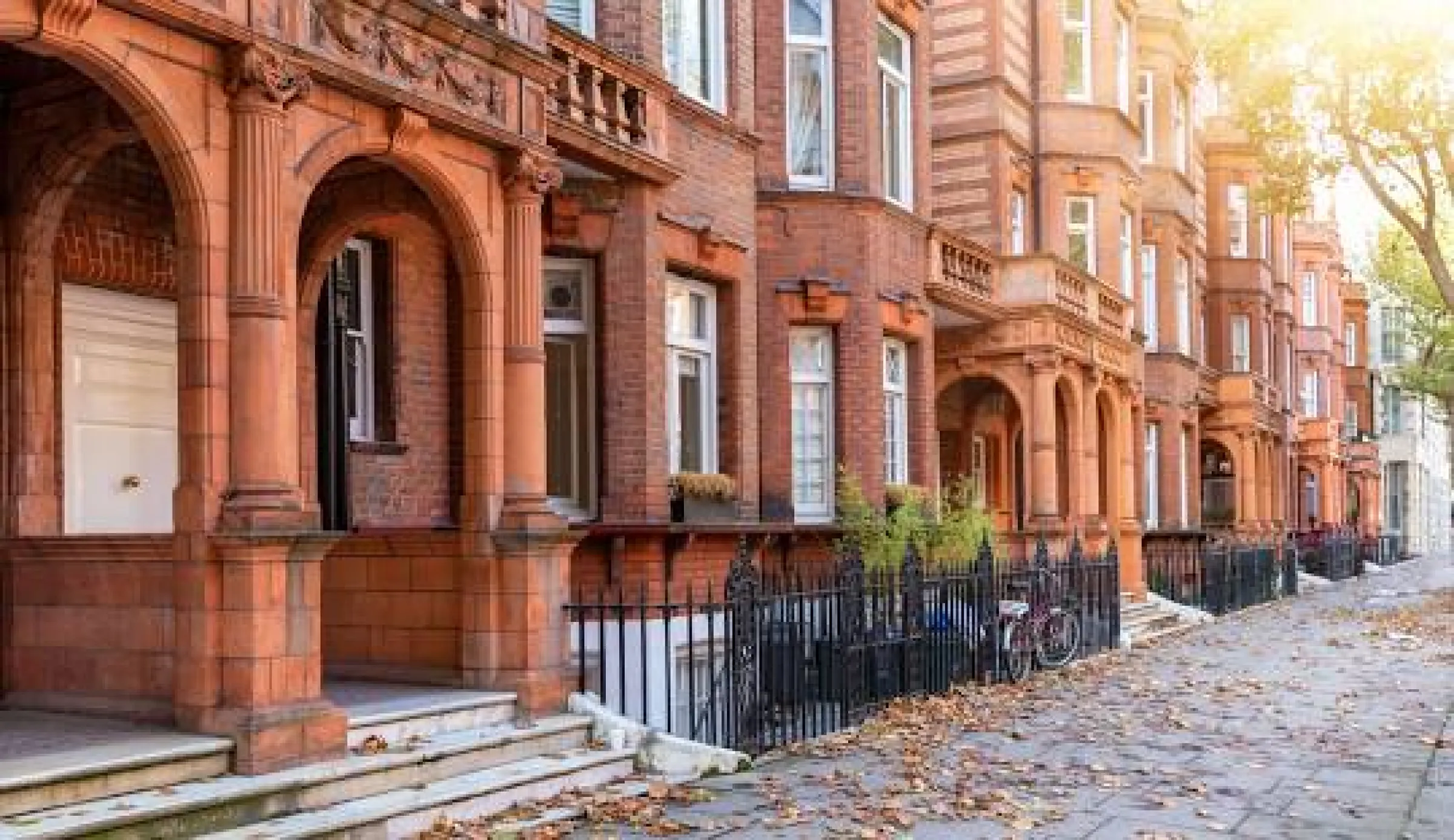
Georgian terraces, Regency stucco, Victorian red brick. Belgravia's white stucco squares, Mayfair's Georgian townhouses, and Knightsbridge's Pont Street Dutch mansions signal permanence, quality, and a planning environment that actively protects its character.

Exclusivity and scarcity

Kensington Palace Gardens has fewer than thirty houses on the entire road. Eaton Square in Belgravia is tightly governed by the Grosvenor Estate. This scarcity is structural — baked into the planning system, the estate ownership model, and the sheer age of the buildings.

Amenities and lifestyle infrastructure

Michelin-starred restaurants, world-class cultural institutions, members' clubs, luxury retailers, and green space within walking distance — a critical mass, not just proximity to a few good restaurants.

Community character

Old-money enclaves like Belgravia and Mayfair attract a very different resident profile from newer-money hotspots. Not a value judgement — a meaningful distinction for buyers who are choosing a way of life, not just a postcode.

Connectivity

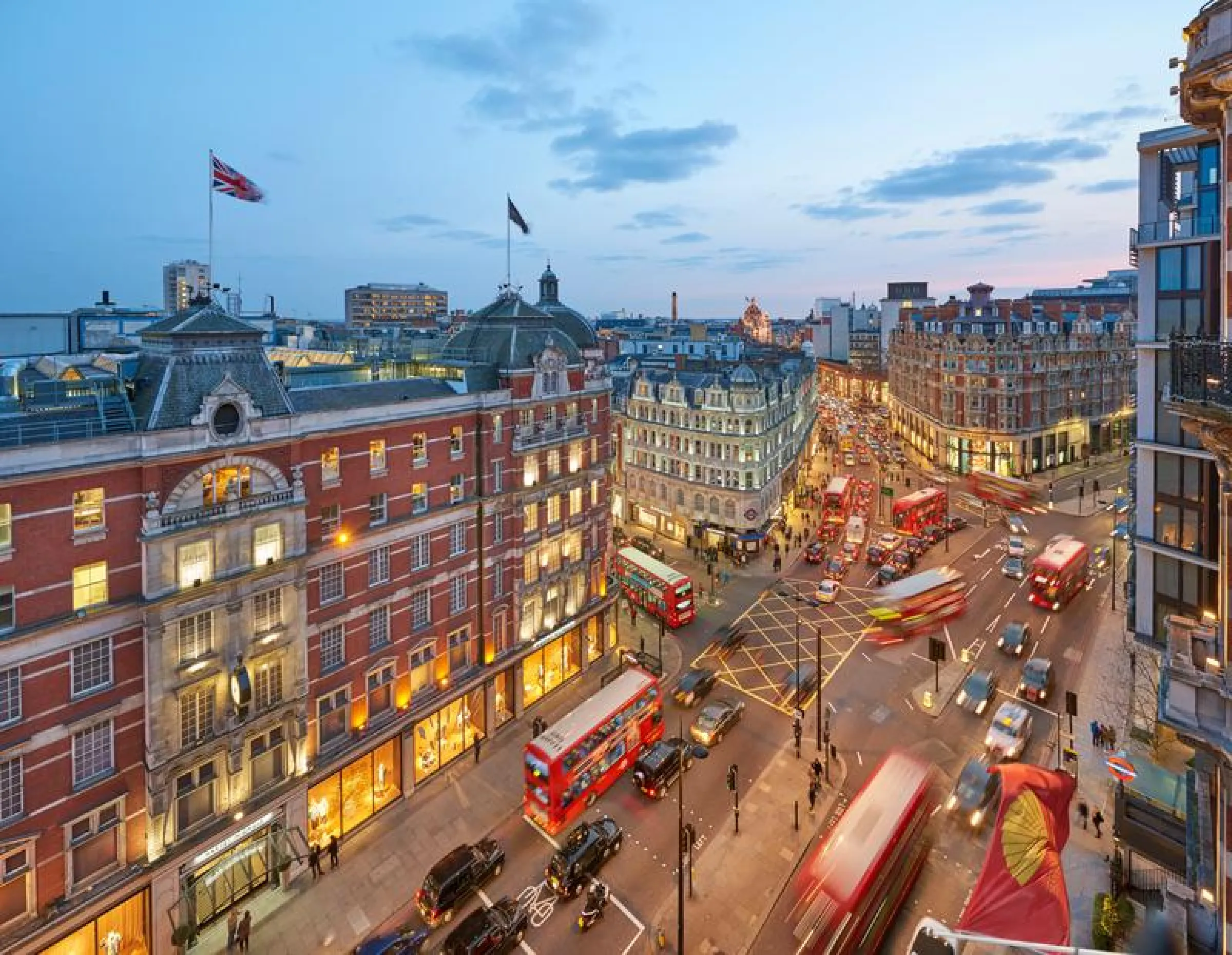
London's luxury areas cluster around the Zone 1 and Zone 2 boundary, with strong Tube, Overground, and now Elizabeth line connectivity. Even the most beautiful neighbourhood loses its appeal if leaving it is a headache.

Prime Central London (PCL) broadly covers Mayfair, Belgravia, Knightsbridge, Kensington, Chelsea, and parts of Marylebone. Super-prime refers to the very top of the market: properties above £10 million, often on specific streets like Kensington Palace Gardens or Cheyne Walk.

Thirteen Postcodes, One Constellation

Mayfair, Belgravia, Knightsbridge and Chelsea form a rough diamond in central-west London, with Kensington to their west, Marylebone and Regent's Park to the north, and Notting Hill, Hampstead, Richmond and Dulwich further out.

A row of buildings near Regent's Park
Photo by Brett Wharton on Unsplash

Marylebone & Regent's Park

Urban sophistication with village charm

£2M–£15M+

Buildings near trees and water viewed from Hampstead Heath
Photo by JD Designs on Unsplash

Hampstead & Primrose Hill

North London's village retreats

£1.5M–£8M+

Covent Garden market building at dusk with lights on
Photo by carmen dominguez on Unsplash

Soho, Covent Garden & the West End

Luxury at the heart of the city

£1.5M–£5M

A Comparison Framework for Discerning Buyers

Choosing between London's luxury neighbourhoods is genuinely difficult — not because any of them are bad choices, but because they each offer something meaningfully different. The right choice depends almost entirely on what you're optimising for.

A leafy Chelsea street scene

Schools, parks, and streets that scale to family life

Kensington and South Kensington top this list for their combination of excellent schools, world-class cultural institutions, and proximity to Hyde Park. Chelsea is a strong second — particularly for families who value character and community over sheer prestige. Hampstead, Richmond, and Dulwich all offer outstanding family environments for those prepared to be slightly further from the centre.

Kensington  ·  South Kensington  ·  Chelsea  ·  Hampstead  ·  Richmond  ·  Dulwich

Capital preservation, yield, and the risk-adjusted view

Mayfair remains the gold standard for capital preservation and long-term appreciation. Knightsbridge and Belgravia follow closely, driven by limited supply and sustained international demand. Marylebone is the standout choice for investors prioritising rental yield over pure capital value — lower entry prices, strong tenant demand, and consistent occupancy rates make it arguably the best risk-adjusted investment in prime central London.

Mayfair  ·  Knightsbridge  ·  Belgravia  ·  Marylebone

Cars parked outside a Mayfair townhouse
Photo by Christian Vasile on Unsplash
A luxury London hotel exterior favoured by international guests

Established communities and understood frameworks

Mayfair, Knightsbridge, and Belgravia have the most established international communities and the best-understood legal and estate management frameworks for overseas buyers. South Kensington is the preferred choice for French nationals. Marylebone is popular with Americans and Middle Eastern residents partly due to Harley Street access. Hampstead has a long-established German and Israeli community.

Mayfair  ·  Knightsbridge  ·  Belgravia  ·  South Kensington  ·  Marylebone  ·  Hampstead

You're not just buying bricks and mortar. You're buying into a neighbourhood's character, its community, its daily rhythms, and its relationship with the rest of the city.

Where museums, galleries and stages cluster

South Kensington is unbeatable for museum density. Chelsea, Notting Hill, and Hampstead all have strong independent gallery scenes and deep cultural histories. Covent Garden and Soho are the obvious choices for theatre, opera, and contemporary dining.

South Kensington  ·  Chelsea  ·  Notting Hill  ·  Hampstead  ·  Covent Garden  ·  Soho

A cultural interior space in a Rosewood Chancery setting
Deer on grass in Richmond Park
Photo by Zoltan Tasi on Unsplash

Room to breathe within the capital

Richmond wins outright for sheer scale — Richmond Park is in a different category from anything else London offers. Hampstead comes second for the extraordinary quality of the Heath experience. Holland Park, Regent's Park, and Hyde Park (accessible from Mayfair, Knightsbridge, and Kensington) all offer exceptional green space within prime central London.

Richmond  ·  Hampstead  ·  Holland Park  ·  Regent's Park  ·  Hyde Park adjacent

Living in, Investing in, or Visiting London's Luxury Neighbourhoods

Knowing which neighbourhood suits you is one thing. Actually navigating London's luxury property market, finding the right hotel, and understanding how the city moves — that's where most guides fall short. Here's what you actually need to know.

Navigating the luxury property market

A significant proportion of prime central London transactions happen off-market — particularly at the super-prime end, where discretion is valued and the pool of potential buyers is small enough that a well-connected agent can match buyer and seller without public listing. If you're serious about buying in Mayfair, Belgravia, or Knightsbridge, working with a specialist prime central London buying agent (rather than a general estate agent) is worth the additional cost. They'll have access to stock that never appears on Rightmove or Zoopla.

Leasehold is the dominant tenure in most prime London areas — particularly where Grosvenor, Howard de Walden or Cadogan estate ownership governs the freehold. Understanding the lease terms, remaining term and service charge structure is essential before making any offer.

When to buy

The market is most active in spring (February–May) and autumn (September–November) — more choice but more competition. Summer sees a notable slowdown. January can offer opportunities as motivated sellers list ahead of the spring rush.

Avoid making major decisions in August: comparable evidence is sparse and valuations can be misleading.

Investment & buy-to-let yields

Approximate gross yields — Savills / Knight Frank

Mayfair

2–3%

Low yield, exceptional capital preservation and sustained long-term price growth.

Marylebone

3–4%

Strong occupancy from corporate and medical sector tenants; the most attractive risk-adjusted profile.

Knightsbridge

2.5–3.5%

Very strong international tenant demand; excellent resale liquidity.

South Kensington

3–4%

Bolstered by the French community and consistent expat demand.

Richmond

3–4%

Family-size properties commanding premium corporate relocation rents.

Emerging areas like Nine Elms may offer higher headline yields but carry more development risk and less liquid resale markets. Always obtain independent financial advice before committing.

Aerial view of London's central neighbourhoods

London's luxury areas cluster around the Zone 1 and Zone 2 boundary, now further connected by the Elizabeth line.  ·  Photo by Marcos Nieto on Unsplash

Luxury hotels by neighbourhood

Mayfair

Claridge's and The Connaught are the definitive choices; The Beaumont is a newer but equally distinguished option.

Knightsbridge

The Lanesborough at Hyde Park Corner offers one of London's most opulent hotel experiences. Bulgari Hotel is the design-conscious choice.

Chelsea

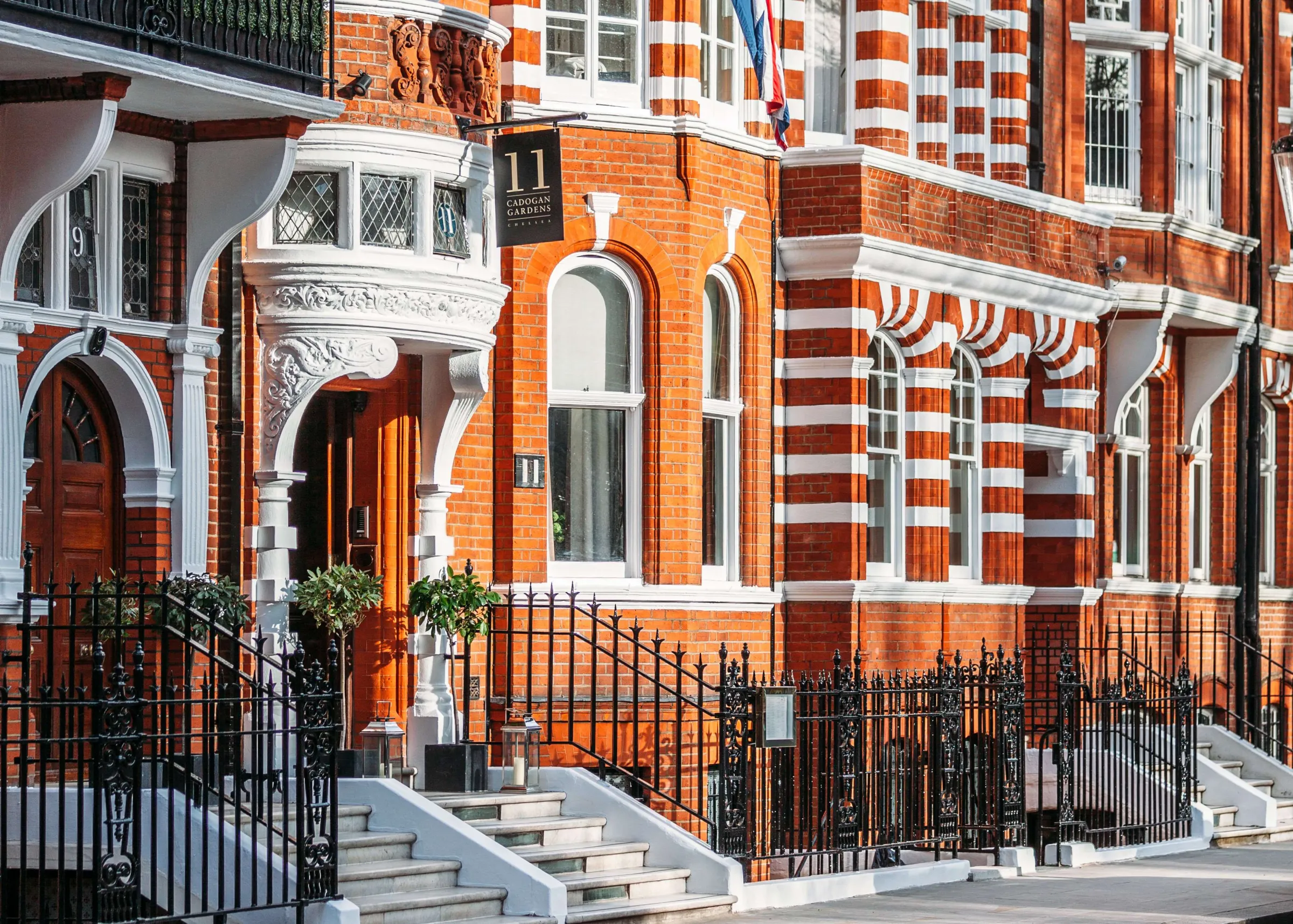
The Cadogan is a beautifully restored Edwardian hotel on Sloane Street with genuine historical character — Oscar Wilde was arrested here in 1895.

Kensington

The Milestone Hotel on Kensington Court is intimate and beautifully appointed, overlooking Kensington Palace Gardens.

Covent Garden / West End

The Savoy on the Strand is London's most iconic address; One Aldwych is a more contemporary alternative with an excellent spa.

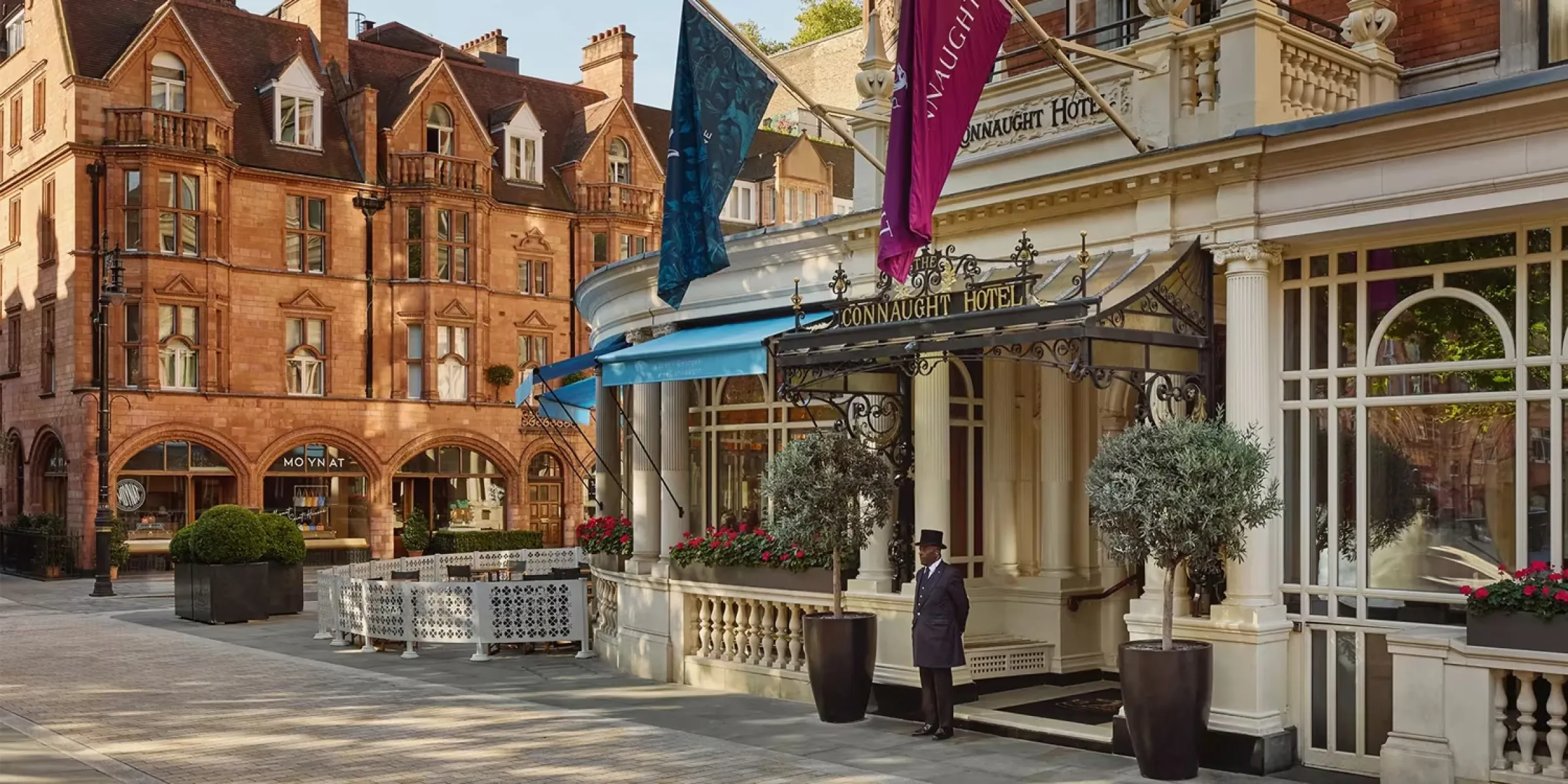
The Connaught hotel exterior in Mayfair

Transport & connectivity

Mayfair has Bond Street (Elizabeth, Jubilee, Central lines) and Green Park (Jubilee, Victoria, Piccadilly) — exceptional multi-line connectivity. South Kensington and Knightsbridge are both served by the Piccadilly line, with South Kensington also on the Circle and District. Hampstead is on the Northern line. Richmond is served by South Western Railway and the District line, roughly 30 minutes to central London.

The Elizabeth line, fully operational since 2022, now connects Bond Street directly to Heathrow in under thirty minutes — a significant benefit for international buyers and frequent travellers.

Seasonal highlights

The Chelsea Flower Show in May transforms the Royal Hospital Chelsea grounds and fills the surrounding neighbourhood with horticulturalists from around the world. Notting Hill Carnival in August is Europe's largest street festival — spectacular if you're in the right spirit, best avoided if you're not.

Wimbledon in late June and early July is a quintessentially English luxury experience. The Regent's Park Open Air Theatre runs from May through September. Hampstead Heath's swimming ponds are at their best in July and August.

Self-Guided Walking Routes

The best way to understand any of these areas is on foot. Three structured routes designed to work on a weekend with no specialist knowledge required.

01

The Mayfair to Chelsea Grand Tour

approx. 5km  ·  approx. 2 hours

Start at Green Park Tube, walk east along Piccadilly then north onto Berkeley Street to Berkeley Square. Head west along Mount Street, then south through Mayfair's mews streets to Belgrave Square. Continue to Sloane Square, then west along King's Road into Chelsea. End at Chelsea Embankment for views of the Thames and Albert Bridge.

Streets: Mount Street, Belgrave Mews West, Eaton Square, Bywater Street, Cheyne Walk.

02

The Kensington to Notting Hill Loop

approx. 4km  ·  approx. 1.5 hours

Start at High Street Kensington Tube, walk north up Kensington Church Street, turning into Kynance Mews for the wisteria-draped facades (best in late April). Continue through Holland Park to Notting Hill Gate, then north up Pembridge Road to Portobello Road. Return via Ladbroke Grove.

Streets: Kynance Mews, Holland Park Avenue, Pembridge Villas, Portobello Road, Elgin Crescent.

03

The Hampstead Village Walk

approx. 3km  ·  approx. 1.5 hours

Start at Hampstead Tube, walk down Flask Walk to Well Walk, passing Burgh House. Head up East Heath Road to Parliament Hill on Hampstead Heath for panoramic views of the London skyline. Return via South End Road, stopping at an independent deli. End at the Holly Bush pub on Holly Mount.

Streets: Flask Walk, Well Walk, Holly Mount, Heath Street, Downshire Hill.

Answers Before You Ask

'Luxury' and 'expensive' are not the same thing in London. The real markers are architectural distinction, exclusivity and scarcity, world-class amenities, a well-defined community character, and genuine connectivity — a combination of five intersecting factors, not just a price tag.

High-rise buildings near the Thames at dusk

Walk them first — read the neighbourhood before you commit to it.

Spend a Saturday morning on Portobello Road, a Sunday afternoon on Hampstead Heath, a weekday evening on Mount Street in Mayfair. London's finest postcodes reward exactly that kind of attention. For those ready to take the next step — arranging viewings, exploring off-market opportunities, or simply walking the streets with fresh eyes